
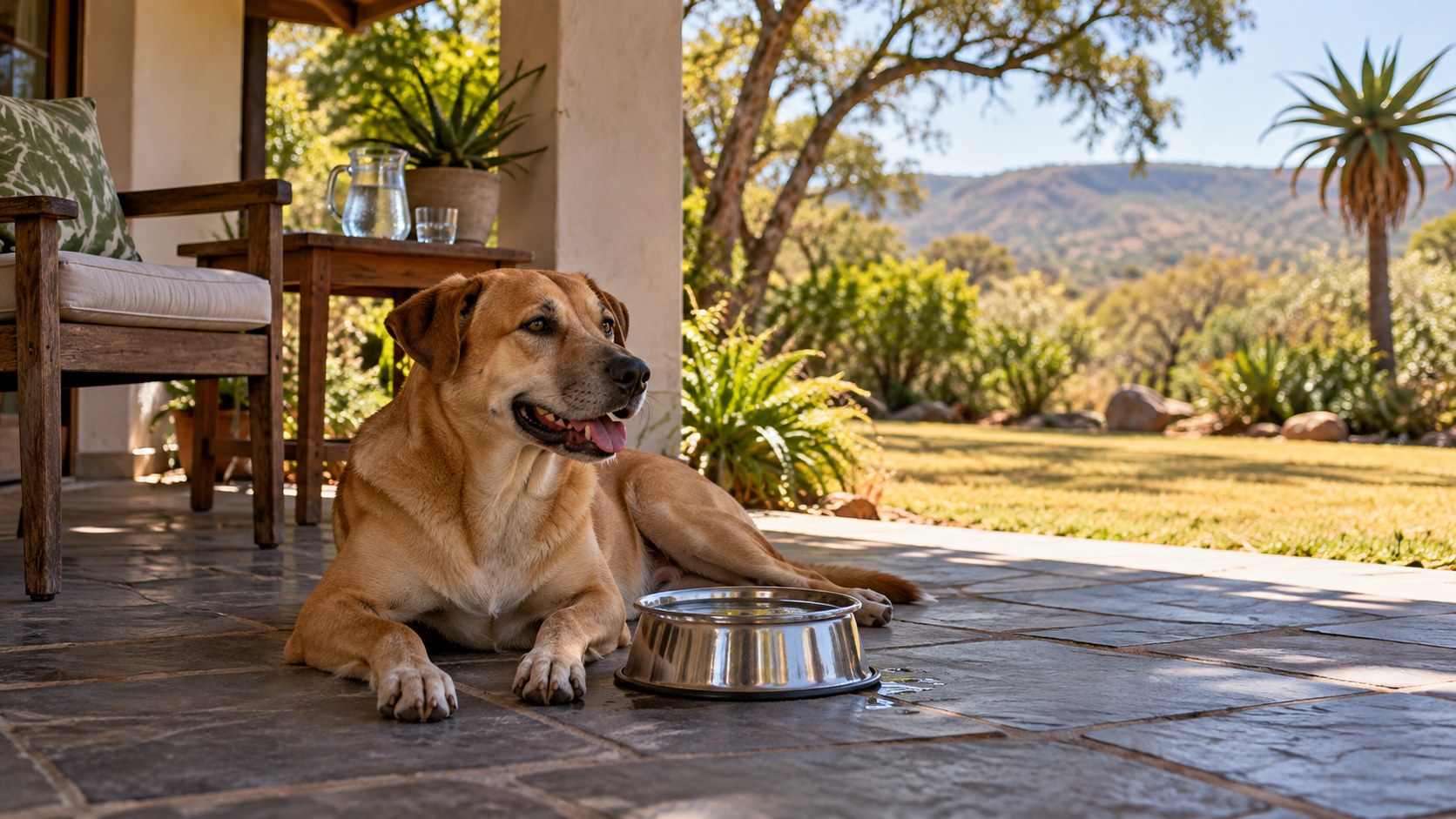
Imagine a hot Lowveld afternoon. A gardener feels dizzy, the dog is panting heavily and an inverter in a closed garage sounds a temperature alarm. Each needs attention, but the person and animal come first. Recognising the warning signs early can prevent a difficult afternoon from becoming an emergency.
The South African Weather Service outlook reported by SAnews on 1 November 2026 included very hot conditions in parts of the Mpumalanga Lowveld. It indicated similar conditions on 2–3 November, with possible thunderstorms, followed by cooler weather in parts of the east on 4 November. Conditions can change, so check the latest local forecast before outdoor work or activities.
Heat can become dangerous before a warning is issued
An official heatwave is a weather classification based on unusually high temperatures lasting several days at a particular location. A person can develop heat illness during a single hot day, or inside a hot building. Waiting for the word “heatwave” before taking precautions can leave people exposed.
Heat builds up when the body cannot release it fast enough. Heavy work, humidity, limited airflow and protective clothing can add to the strain. Babies, older people and those with chronic health conditions need particular care. Warm kitchens, workshops and poorly insulated homes also deserve attention.
Recognise when someone needs urgent help
Dizziness, headache, nausea, weakness and heavy sweating can indicate heat exhaustion. Stop the activity, move the person somewhere cool, loosen tight clothing and cool their skin. Offer small sips of water only if they are fully alert and can swallow safely. Arrange medical assessment; seek urgent help if they vomit, worsen or do not improve.
Confusion, seizures, unusual behaviour or loss of consciousness after heat exposure may indicate heatstroke. This is a medical emergency. The person may still be sweating: the CDC lists both dry skin and profuse sweating among possible signs.
Call 112 from a cellphone. Stay with the person and begin rapid cooling in a cooler place, using wet skin, cold wet cloths and moving air. Follow the emergency operator’s instructions. Do not wait for a thermometer reading or give anything to drink when heatstroke is suspected. Aspirin and paracetamol are not treatments for heatstroke.
Prevention starts with the day’s arrangements. Move strenuous tasks to cooler periods, provide shaded breaks and drinking water, and check on vulnerable relatives or neighbours. Never leave a child in a parked vehicle. Anyone with a prescribed fluid restriction should ask their clinician for individual advice rather than follow a blanket daily water target.
Act quickly when pets overheat
Dogs and cats can also suffer heatstroke. Heavy panting, excessive drooling, difficult breathing, weakness, vomiting or collapse need prompt attention. Flat-faced animals, overweight pets and those with health problems are particularly vulnerable. Provide fresh water and shade, limit exercise in hot conditions and prevent animals becoming trapped in hot rooms or vehicles.
If you suspect heatstroke, move the animal out of the heat, phone the nearest open vet and begin cooling immediately. Apply cool running water over the body, wetting through the coat to the skin while keeping water away from the face and airway. Protect yourself from bites and other hazards.
The 2026 RECOVER veterinary first-aid guidelines support active cooling before urgent transport. Start cooling while arranging help; do not wait for the animal to recover before seeking veterinary care. Never force water into its mouth. An animal that appears better still needs a vet’s assessment.
Give cooling equipment room to work
A hot garage or crowded equipment cupboard can make it harder for an inverter to release heat. Victron’s Inverter Smart guidance explains that high surrounding temperatures, particularly with a heavy load, can cause temperature alarms and protective shutdowns.
Keep the manufacturer’s required ventilation space clear. Have recurring alarms investigated by a competent installer rather than bypassing protection. Batteries and other devices have their own limits; an inverter’s specifications cannot be applied to every part of the system.
Refrigerators and freezers also need suitable surroundings. Bosch advises checking the appliance’s climate class, which identifies its permitted room-temperature range. Read the rating plate and manual, maintain the prescribed airflow and have poor cooling investigated. A fridge in a hot outbuilding may face different conditions from one inside the house.
For businesses storing perishable goods, monitor the required product temperatures and plan where stock could safely be moved if cooling fails. At home, shade sunny windows and use cooler night air when safe. A fan alone may not prevent heat illness in extreme conditions. If equipment smokes or catches fire, leave the danger area and call emergency services.
Make a practical plan for the workplace
Employers with outdoor teams or hot indoor work areas should review tasks, rest arrangements, drinking water and emergency response. Staff need to know who can stop an unsafe activity and who will call for help.
South Africa’s Physical Agents Regulations address workplace heat exposure, including risk assessment and controls. Technical assessment uses measures that differ from the air temperature shown on a weather app. A single temperature reading is therefore not a complete compliance assessment.
An amendment was published on 20 February 2026. Have a competent occupational hygienist confirm the current technical requirements and exposure limits for your workplace. The household precautions in this article are practical recommendations, not a statutory inspection checklist.
Check the financial consequences and your cover
Heat-related problems can lead to medical or veterinary costs, repairs, spoiled stock and disrupted trading. For a household, replacing a freezer’s contents can strain the monthly budget. For a lodge or food business, losing refrigeration may affect both stock and service.
Ask your broker or insurer how your cover treats damage to equipment, deterioration of its contents and any resulting income loss. Santam’s commercial material describes machinery breakdown, stock deterioration and business interruption following machinery breakdown separately. That illustrates why one type of cover should not be assumed to include every consequence.
Cover depends on the policy wording, cause of loss, applicable conditions and circumstances. Confirm relevant disclosure and maintenance obligations, limits and excesses. Keep service records, fault codes and temperature logs where applicable, and report losses as required by your policy.
Start with a five minute heat check
Before the hottest part of the day, walk through the property. Check that people and pets have water and a cooler place to rest, and that equipment ventilation is clear. Deal with warning signs immediately and keep emergency contacts accessible.
This article accompanies Black Sable™ RISK’s Radio Laeveld topic for the week of 2–8 November 2026. Our related Lowveld heat and storm readiness brief covers practical planning for outdoor work and property operations.
Black Sable™ RISK can help property owners and operators review risks, prioritise corrective actions and keep track of outstanding work.
Sources and references
Sources support the article’s general guidance. Equipment instructions and insurance terms must be checked for the particular installation and policy.
SAWS and SAnews — Weather Questions; SAWS releases weather outlook for elections, 1 November 2026. SAWS heatwave definition | Dated weather outlook
National Department of Health — National Heat Health Action Guidelines, October 2020. South African exposure and prevention guidance. Read the guidelines
World Health Organization — Heatwaves: How to stay cool, 11 October 2024. Personal precautions and home cooling. Read the guidance
CDC and NIOSH — Heat-related illnesses, 3 March 2026; Heat-Related Illnesses infographic, 2017. Warning signs and first aid. NIOSH guidance | CDC infographic
Department of Cooperative Governance and Traditional Affairs — How to Prepare for a Flood, 10 December 2019. Source used only to confirm South African emergency contact numbers. Emergency numbers
Royal Veterinary College and RECOVER — Heatstroke in dogs and cats, undated; Mandell et al., First Aid for Dogs and Cats: Clinical Guidelines, 25 August 2026, section 3.4. RVC pet guidance | RECOVER clinical guidelines
Victron Energy — Inverter Smart 2k5 & 4k 230V operation manual, undated. Model-specific high-temperature warnings and shutdowns. Read the manual
Bosch Home South Africa — Installing your fridge, undated. Climate class and permitted room temperature. Read the installation guidance
Department of Employment and Labour — Physical Agents Regulations, 2024: GN 5952, GG 52226, 6 March 2025; amendment GN 7149, GG 54177, 20 February 2026. Full amendment text remains unverified for this article. Original regulations | Amendment publication
Santam — Commercial Insurance brochure, publication date unconfirmed. Separate product descriptions; not the reader’s policy wording. Read the brochure
Black Sable™ RISK — Lowveld heat and storm readiness for the week ahead, 1 November 2026; edition 2–8 November. Read the related brief